
Imagine waking up every morning to a sky full of clouds — not made of water, not made of ice, but made of vaporized rock and sand swirling thousands of miles above your head. Then imagine that by sunset — if sunset ever came — every single one of those rocky clouds had completely vanished, leaving behind a perfectly clear sky stretching to the stars.
That is the daily weather on a planet 690 light-years from Earth.
And thanks to NASA’s James Webb Space Telescope, we just read that weather forecast for the very first time in human history.
This is not science fiction. For the first time, astronomers have observed a daily weather cycle on a planet outside our solar system, showing thick clouds in the morning and a clear sky by evening. The discovery was published in the prestigious journal Science on May 21, 2026 — and it has already turned the world of planetary science upside down.
Here is everything that happened, why it matters, and what it means for the future of our search for life beyond Earth.
Meet WASP-94Ab: The Planet With a Weather Problem
Before we get into what JWST discovered, we need to understand the world it was studying.
WASP-94Ab is located about 690 light-years from Earth, orbiting one star in a wide binary system — a pair of stars that orbit each other at a vast distance. But what makes this planet truly alien is its relationship with its host star.
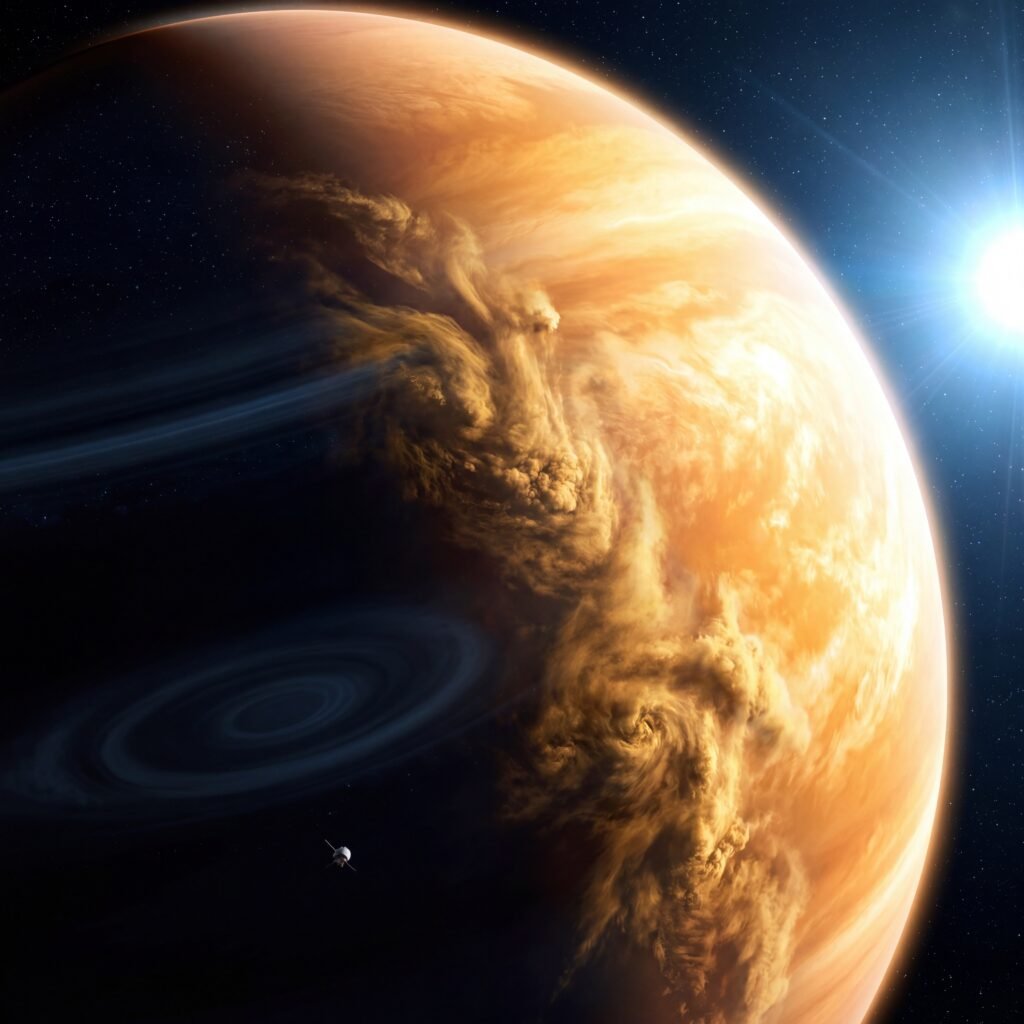
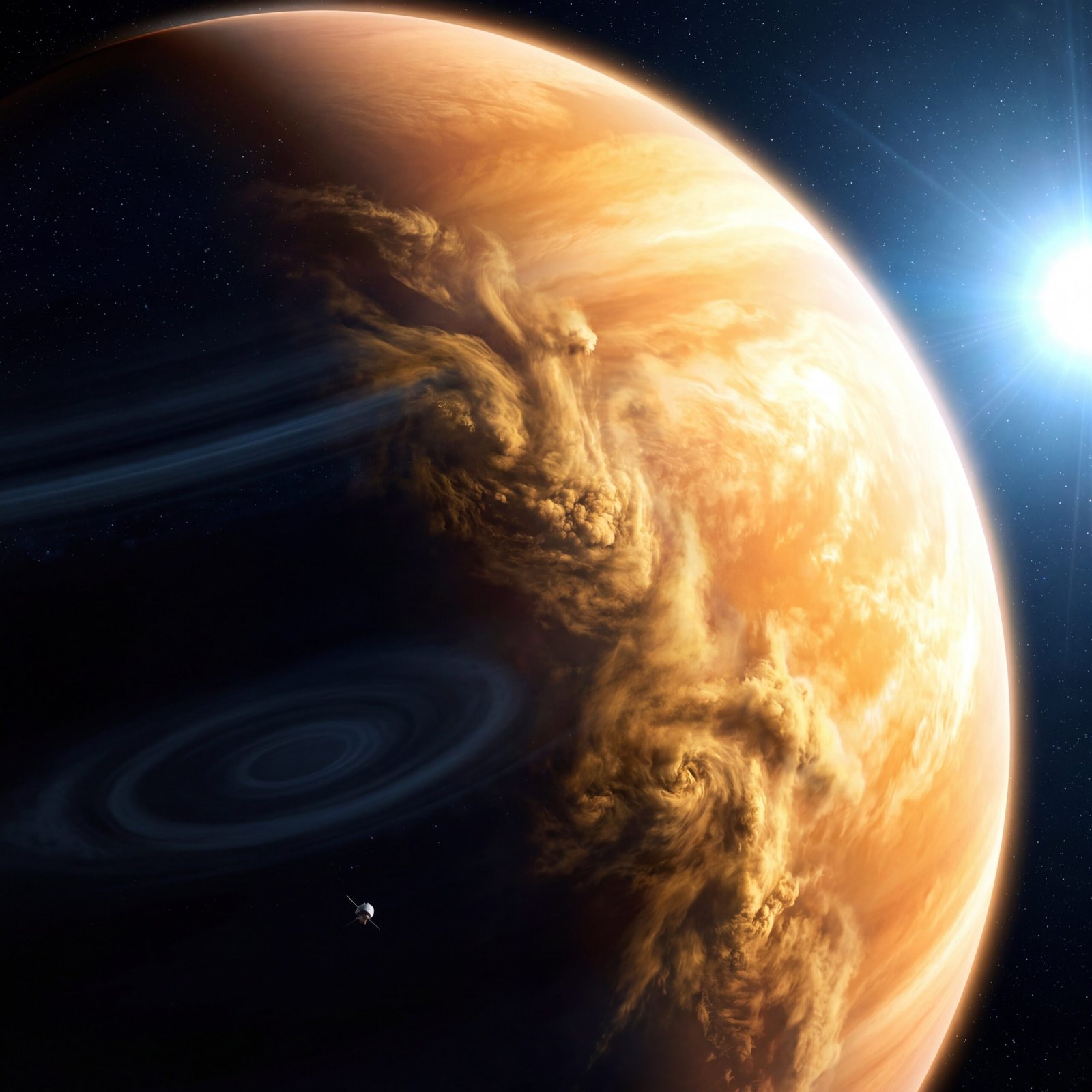
WASP-94Ab is a gas giant 1.7 times larger than Jupiter and orbits its star every four days at a distance of just 5.1 million miles — close enough to be hotter than over 2,200 degrees Fahrenheit.
Think about that for a moment. Mercury, the closest planet to our Sun, orbits at about 36 million miles away. WASP-94Ab orbits its star at only 5 million miles. It is seven times closer to its star than Mercury is to our Sun. The result is a world of almost incomprehensible heat — a scorching inferno where rock itself turns to vapor and the concept of “weather” works by completely different rules.
Planets like this have a name: hot Jupiters. And for decades, they have been one of the most studied — and most frustrating — types of worlds in the galaxy.
The Problem That Haunted Astronomers for Decades
Here is the issue. Scientists have known about hot Jupiters for over thirty years. We have found hundreds of them. And for just as long, we have been trying to figure out what their atmospheres are actually made of.
But there was always a problem. Clouds.
Studying hot Jupiter atmospheres has long been difficult because clouds of vaporized metals and rock obscure direct observations. Lead astronomer David Sing of Johns Hopkins University described these clouds bluntly: “We’ve known for quite a while that clouds are pervasive on hot Jupiter planets, which is annoying because it’s like trying to look at the planet through a foggy window.”
When telescopes tried to read the chemical composition of these planet’s atmospheres, the clouds blocked the view. Scientists were forced to take an average reading across the entire face of the planet — cloudy side and clear side alike — and those averaged results were wildly misleading.
If the averaging bias seen on WASP-94Ab applies broadly, then many published composition estimates for hot Jupiters may need revision. In other words: we may have been getting the chemistry of hundreds of alien planets wrong for over a decade. And we didn’t know it until now.
How James Webb Changed Everything
The James Webb Space Telescope did something no previous telescope could do. It separated the cloudy morning side of WASP-94Ab from the clear evening side — and read them independently.
The technique is called transit spectroscopy. By watching WASP-94Ab as it transited — or crossed the face of — its star from JWST’s vantage point, astronomers were able to watch as the light from the star was filtered through the atmospheric gases and clouds on the leading and trailing limbs of the planet as it transited.
Think of it like holding a glass of juice up to a light. The light passes through the liquid, and what comes out the other side tells you what the juice is made of. JWST does exactly that — but with starlight filtering through an alien atmosphere millions of miles away.
The results were jaw-dropping.
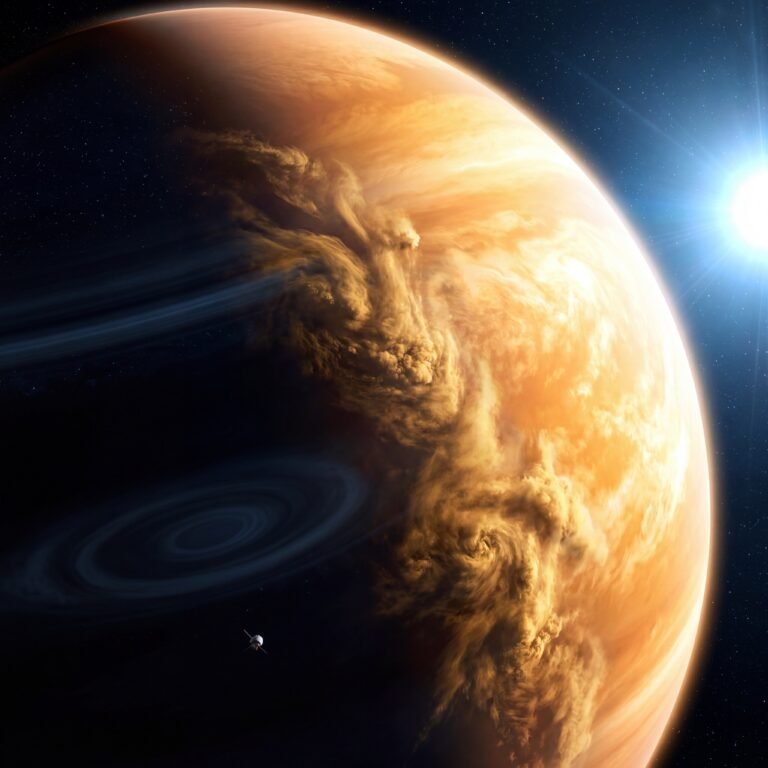
Astronomers found a stark contrast: the morning edge of the planet was packed with thick magnesium silicate — essentially sand — clouds. The evening edge was completely clear.
For the first time, a telescope had detected not just the presence of weather on another world, but the daily cycle of that weather. Morning clouds. Evening clarity. A complete meteorological rhythm playing out on a planet nearly 700 light-years away.
What Exactly Are Clouds Made of Sand?
This is the part that sounds like it belongs in a fantasy novel but is very much real science.
On Earth, clouds form when water vapor rises into the atmosphere, cools, and condenses into tiny water droplets or ice crystals. The result is the fluffy white and grey clouds we see every day.
On WASP-94Ab, the temperatures are so extreme — over 2,200 degrees Fahrenheit — that water would be instantly vaporized. There is no liquid water. There is no ice. Instead, the heat is powerful enough to vaporize rock — specifically magnesium silicate, the same mineral family that makes up much of Earth’s mantle and forms the glass in your windows.
The cloud cycle on WASP-94Ab is likely tied to its tidal locking, which keeps one hemisphere in permanent daylight and the other in constant darkness. Strong winds at the boundary between day and night can lift magnesium silicate clouds into the atmosphere on the nightside. These clouds then drift to the dayside, where heat causes them to sink out of view, before returning to the nightside as circulation continues.
To put it simply: on this alien world, sand is a gas. It rises into the atmosphere as vapor, forms thick rocky clouds on the morning side of the planet, and then evaporates back into the searing heat as those clouds rotate around to the blazing dayside.
The daily weather forecast for WASP-94Ab? Heavy morning sandstorms, clearing up beautifully by sunset.
What Is Tidal Locking, and Why Does It Create Such Extreme Weather?
To understand why WASP-94Ab has this remarkable weather pattern, you need to understand one of the most fascinating phenomena in planetary science: tidal locking.
WASP-94Ab is held so close by its star that it has become tidally locked, much like the Moon around Earth: the planet’s spin and its orbit are synchronized so that the world always turns the same side to its stellar host. This results in eternal day for one half of the planet and eternal night for the other.
Imagine a world where the Sun never moves in the sky. On one side of the planet, the star beats down with relentless, merciless heat — forever. On the other side, it is perpetually dark and frigid — forever. There is no sunrise. There is no sunset. There is only a razor-thin boundary between the two extremes, where the temperatures clash and the most dramatic weather in the galaxy takes place.
The evening limb of WASP-94Ab is roughly 450 Kelvin hotter than the morning limb. The difference is large enough that the chemistry and cloud cover on each side behave like two different planets stitched together.
It is on this boundary — this terminator line between eternal day and eternal night — that the rocky sandstorm clouds form, rise, and eventually get swept around the planet by ferocious equatorial winds. Powerful winds at the day-night terminator lift magnesium silicate high into the atmosphere over the cold night side, where it condenses. Those clouds then drift toward the dayside, where the extreme heat dissolves them, and the cycle begins again.
The Discovery That Rewrote a Decade of Science
Here is where the story gets even bigger.
When previous telescopes — like NASA’s Hubble Space Telescope — tried to read WASP-94Ab’s atmospheric chemistry, they measured the whole planet at once. They couldn’t separate the cloudy morning side from the clear evening side. The result was a badly distorted picture.
Previous inaccurate measurements of WASP-94Ab’s atmospheric composition had suggested that oxygen and carbon are hundreds of times more abundant than on Jupiter.
Hundreds of times. That would have made this planet chemically extraordinary — wildly different from anything in our solar system.
But JWST told a completely different story. JWST found that WASP-94Ab’s atmosphere has much less oxygen and carbon than expected — only about five times Jupiter’s levels, not hundreds of times higher like earlier guesses.
The difference? The clouds. Old telescopes were averaging the heavily cloud-obscured morning side with the clear evening side, and the result was completely wrong. Once JWST separated the two sides and looked at only the clear evening atmosphere, the true picture emerged: WASP-94Ab is actually a fairly ordinary gas giant — chemically similar to our own Jupiter — just trapped in an extraordinary situation around an extremely close star.
This has enormous implications. Tidally locked worlds are common among the exoplanets accessible to current instruments. If the averaging bias seen on WASP-94Ab applies broadly, then many published composition estimates for hot Jupiters may need revision.
In plain English: we may have been wrong about dozens or even hundreds of alien planets. This one discovery could trigger a wholesale re-evaluation of a decade’s worth of exoplanet science.
It’s Not Just One Planet
The astronomers didn’t stop at WASP-94Ab. They kept going.
The team has already extended the work. Follow-up JWST observations of eight other hot Jupiters turned up a similar morning-evening cloud cycle on at least two of them — WASP-17b and WASP-39b. Both had previously been studied with Hubble, but Hubble could not resolve the limbs separately. Now, with JWST’s sharper vision, the same cloud cycling pattern has been confirmed on multiple worlds.
Sing and his team plan to use new JWST data to study cloud cycles on many different types of exoplanets, including a gas giant in the habitable zone.
That last detail is the one that should make your heart beat a little faster. A gas giant in the habitable zone — the region around a star where liquid water could theoretically exist on a planet’s surface. These are the kinds of worlds that most excite scientists searching for signs of life. And now, for the first time, we have a tool powerful enough to read their weather.
What This Means for Finding Life
We are still a long way from finding life on another planet. No one is claiming that WASP-94Ab hosts any form of life — with temperatures exceeding 2,200 degrees Fahrenheit and clouds made of vaporized rock, it is one of the most hostile environments imaginable.
But the principle behind this discovery is profoundly important for the search for life.
To determine whether a planet could support life, scientists need to understand its atmosphere in detail. They need to know what gases are present, in what quantities, and how they behave under different conditions. For years, clouds have been the obstacle standing in the way of those measurements. JWST has now shown that clouds don’t have to be an obstacle — they can be understood, mapped, and accounted for.
Scientists ultimately hope to detect signs of life on distant worlds, possibly within the next few decades. The launch of JWST in 2022 marked the beginning of a new phase. For the first time, astronomers could study the atmospheres of many exoplanets in detail, gaining insights into their composition and structure.
Every discovery like this one brings us one step closer. Not by finding life, but by building the tools, techniques, and understanding that will one day allow us to recognize it when we see it.
The Bigger Picture: What JWST Has Already Changed
It is worth pausing for a moment to reflect on what the James Webb Space Telescope has accomplished in just a few years of operation.
JWST has captured light from galaxies formed just 300 million years after the Big Bang — the oldest light ever observed. These ancient galaxies are helping scientists understand how the first stars and galaxies formed.
It has imaged star-forming regions hidden behind impenetrable clouds of dust that no previous telescope could peer through. It has found organic molecules — the building blocks of life — frozen in ice around young stars in neighboring galaxies. It has revealed the chemical composition of exoplanet atmospheres with a precision that was considered impossible just ten years ago.
And now, it has read the weather forecast on an alien planet almost 700 light-years from home.
Every time scientists point JWST at something new, it delivers results that surprise them. Lead researchers have repeatedly said the same thing: “Every time we look at these images, we learn something new and unexpected.”
The Bottom Line
The universe is telling us its secrets. We just needed a big enough ear to hear them.
The James Webb Space Telescope has given us that ear. By separating the cloudy morning side of WASP-94Ab from its clear evening atmosphere, it didn’t just discover alien weather — it corrected a decade of scientific error and opened an entirely new chapter in how we study planets beyond our solar system.
The forecast for WASP-94Ab is sandy mornings and clear evenings. The forecast for exoplanet science? Cloudless skies ahead, for the first time in a very long time.
And somewhere in the galaxy — on a planet orbiting in the habitable zone of a distant star — there may be weather that looks a little more familiar. Weather we would recognize. Weather that might, one day, tell us we are not alone.
JWST is already looking.
🌐 Follow neboda.ai for the latest breakthroughs from the James Webb Space Telescope, NASA missions, and the greatest discoveries in the history of space exploration.