
Picture this.
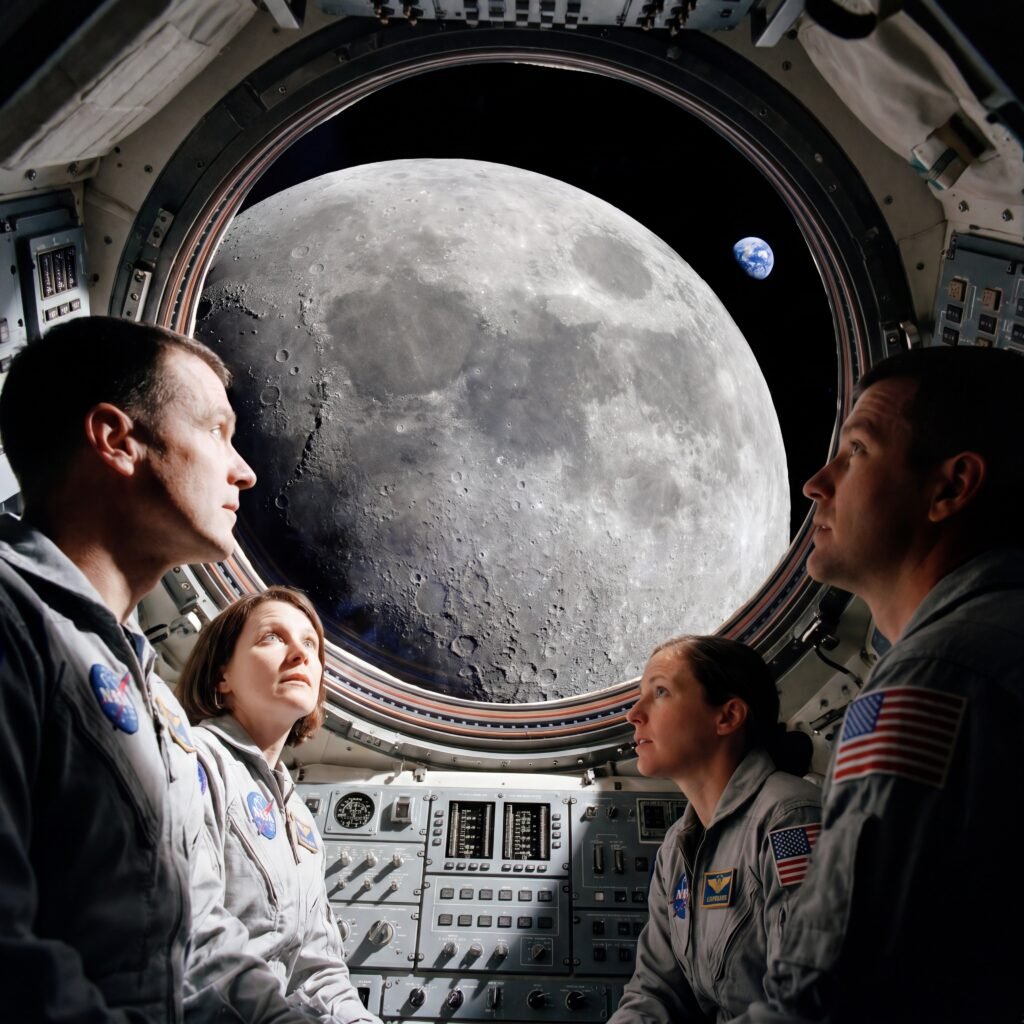
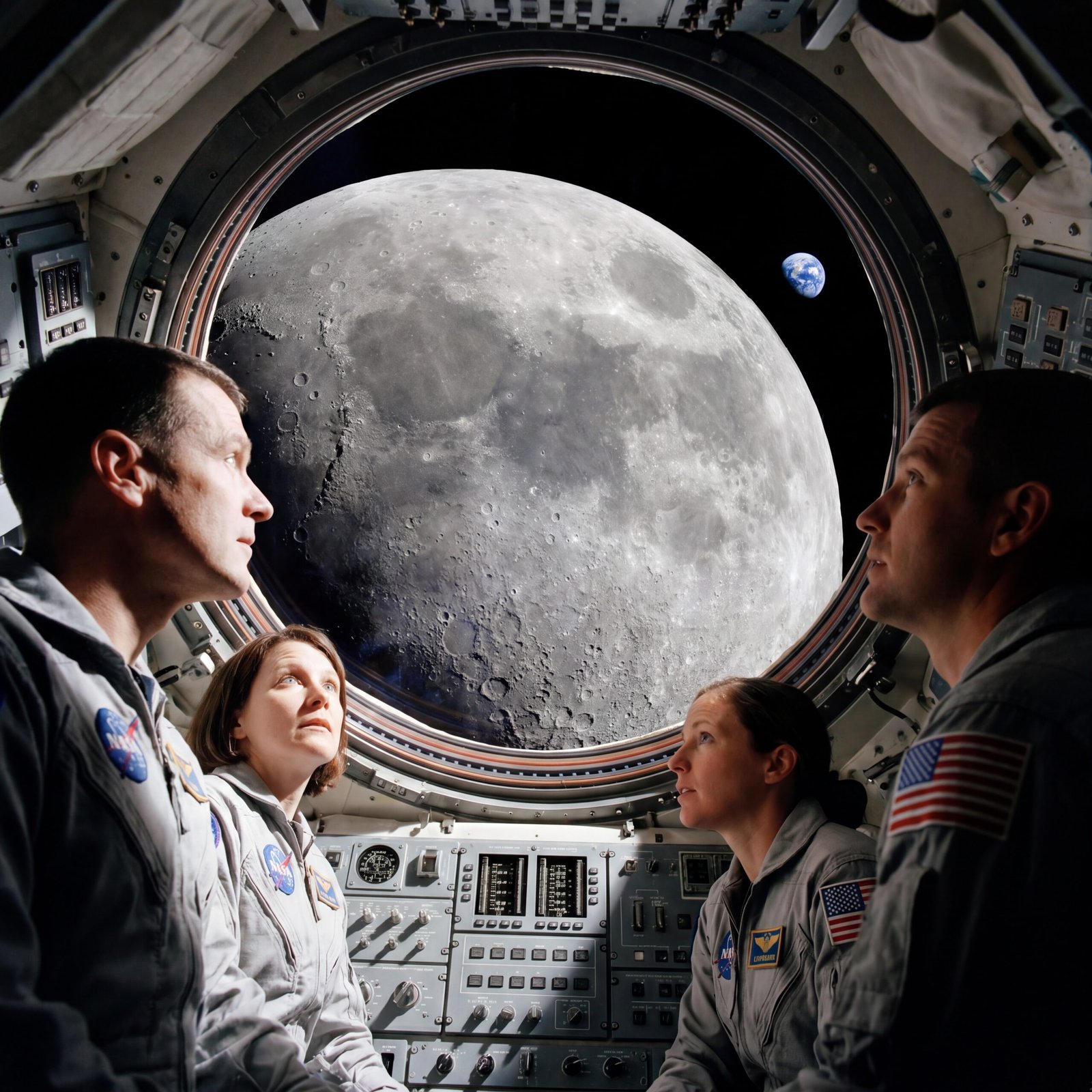
You are sitting inside a spacecraft roughly the size of a large SUV. Outside your window, a barren grey world — ancient, silent, and impossibly large — slowly fills your entire field of vision. Behind you, shrinking with every passing second, is a small blue marble hanging in the blackness of space. That blue marble is home. Every human being you have ever loved is on it.
In front of you is the Moon.
This is what four astronauts experienced in early April 2026, when NASA’s Artemis II mission made one of the most breathtaking journeys in the history of our species. For the first time since December 1972, human beings left the safety of Earth’s orbit and ventured into deep space. And for the first time in human history, anyone — anyone at all — traveled farther from Earth than any person before them.
This is the full story of Artemis II.
Who Were the Four Astronauts?
Before we go anywhere, let’s meet the crew. Because behind every historic mission are extraordinary human beings.
NASA’s Space Launch System rocket sent NASA astronauts Reid Wiseman (Commander), Victor Glover (Pilot), and Christina Koch (Mission Specialist), along with Canadian Space Agency astronaut Jeremy Hansen (Mission Specialist) aboard the Orion spacecraft on a planned test flight around the Moon and back.
Each of them carries a historic distinction:
With Glover, Koch and Hansen aboard, the mission represents the first time a Black astronaut, a woman astronaut, and a non-American astronaut, respectively, have ventured this far from Earth.
These are not just astronauts. They are milestones in the long arc of human progress — proof that the story of space exploration belongs to all of us.
April 1, 2026: Liftoff
NASA’s Space Launch System rocket lifted off from Launch Pad 39B at Kennedy Space Center in Florida at 6:35 p.m. EDT on April 1, 2026, sending the four astronauts aboard the Orion spacecraft named “Integrity” on a planned 10-day journey around the Moon and back.
The world watched. Millions tuned in across dozens of streaming platforms. NASA’s live coverage aired on NASA+, Amazon Prime, Apple TV, Hulu, Netflix, HBO Max, and Roku, alongside the agency’s 24/7 YouTube channel.
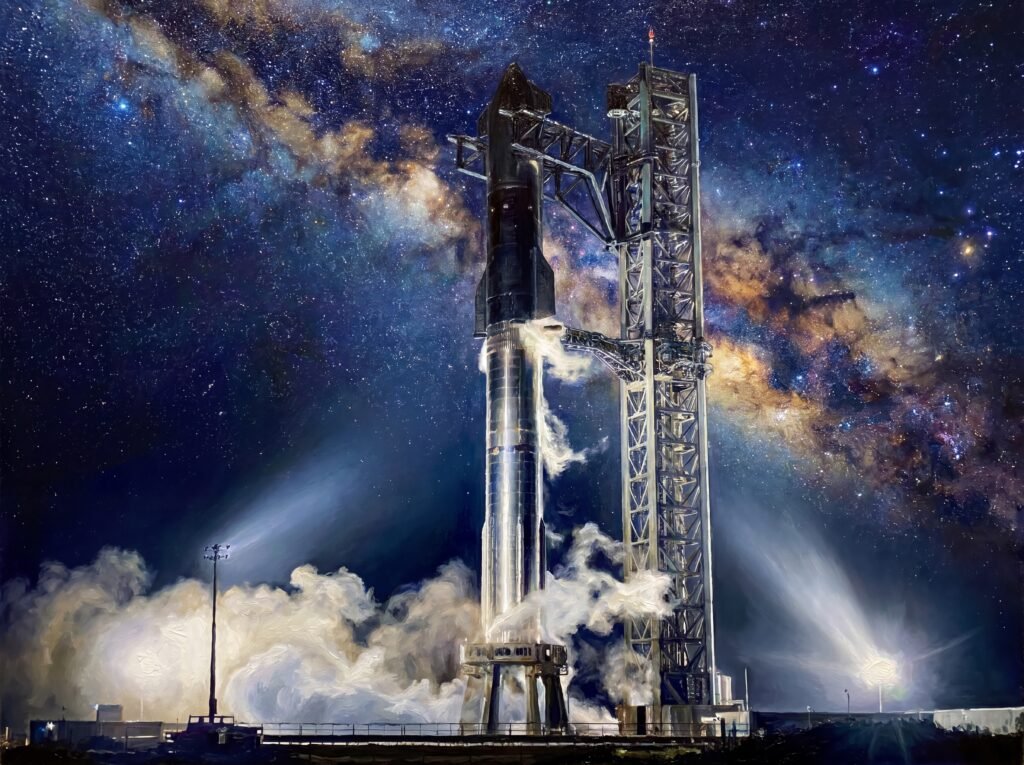
The SLS rocket — NASA’s most powerful since the Saturn V of the Apollo era — lit its engines and thundered off the same pad that launched the first Moon landing missions over fifty years ago. It was, in every sense, a passing of the torch across generations.
April 2: Heading for the Moon
One day after liftoff, with Earth already shrinking in the windows of Orion, the crew performed the translunar injection burn — a critical engine firing that set them on course for the Moon.
A view of Earth taken by an Artemis II astronaut from one of the Orion spacecraft’s windows after completing the translunar injection burn features two auroras, zodiacal light, and Venus visible against the darkness of space.
These images — raw, unedited photographs of our home planet from deep space — spread across social media within hours of being released. They were a reminder of something important: from far enough away, all of Earth’s divisions — its borders, its conflicts, its noise — disappear. There is only the blue marble.
The Artemis II astronauts shared their first impressions from space, describing stunning views of Earth and the Moon as they continued their historic mission beyond orbit, marking humanity’s return to deep space travel after more than 50 years.
April 5: Crossing the Threshold
On Day 5 of the mission, something remarkable happened — something that has occurred only a handful of times in human history.
At one point on Day 5 of the flight, the spacecraft officially crossed the threshold of the lunar sphere of influence — the point in space where the tug of the Moon’s gravity is stronger than Earth’s gravity.
At that moment, the crew were no longer falling toward Earth. They were falling toward the Moon. The four astronauts had left the gravitational embrace of their home planet and entered the domain of another world entirely.
Aboard Orion, Canadian astronaut Jeremy Hansen marked the occasion in a uniquely human way. Ahead of the lunar flyby, Hansen gave himself a shave — not as straightforward as on Earth, since a conventional electric trimmer would cause tiny hairs to float around in microgravity. Instead, astronauts use an electric shaver with a vacuum attached.
Even 250,000 miles from home, the small rituals of daily life find a way to persist.
April 6: The Lunar Flyby — The Heart of the Mission
This was the day everything built toward. The lunar flyby.
Artemis 2 looped around the Moon’s far side on April 6, in a nearly seven-hour encounter that gave its four astronauts views of Earth’s nearest neighbor that human eyes had never seen before.
Think about that. Human eyes. Never seen before. In all of recorded history — across thousands of years of astronomy, stargazing, and spaceflight — no human being had ever witnessed these particular views of the Moon’s far side. The Artemis II crew was the first.
The Record Falls
At their farthest point, the crew traveled 252,756 miles from Earth, setting a record for the greatest distance humans have traveled in space and observing the lunar surface like never before.
They broke the Apollo 13 record for the greatest distance any humans have traveled from our planet — surpassing it by over 4,000 miles. Apollo 13’s record had stood for 56 years. It fell in April 2026.
The Far Side: “Impossibly Rugged”
The astronauts viewed never-before-seen parts of the Moon’s surface: areas on the far side that aren’t visible from Earth. Even the Apollo astronauts couldn’t view the Moon’s far side in this way because of the paths and timing of their flights.
What did they see? The astronauts were not quiet about it. Christina Koch relayed to Mission Control: “We have two folks at the window deep in discussion, talking about all of the awesome features that they’re seeing.” Koch also marveled at the size of Hertzsprung basin, on the Moon’s far side, comparing it to the Orientale basin, a 3.8 billion-year-old crater that formed when a large object smashed into the Moon’s surface.
At one point, one of the astronauts remarked on the numerous craters dotting the entirety of the Moon’s far side, calling it “impossibly rugged.” “It reminds you that the whole far side is that way,” he said. “No surface of the terminator is not marked by meteor impact.”
The crew worked in shifts and noticed new shades of brown and blue on the Moon’s surface, offering clues about its geological history.
The Solar Eclipse No Human Had Ever Seen
As Orion swept around the far side of the Moon, something extraordinary happened. The Moon positioned itself perfectly between the spacecraft and the Sun — and the crew witnessed a total solar eclipse from deep space.
Captured by the Artemis II crew during their lunar flyby, an image shows the Moon fully eclipsing the Sun. The corona forms a glowing halo around the dark lunar disk — one of the most hauntingly beautiful photographs ever taken by human hands.
The Artemis II crew captured a new image of the far side of the Moon during Day 4 of their lunar flight, and the crew expected to see “two identical crescents” as they changed positions during the flyby.
40 Minutes of Silence
For roughly 40 minutes during the flyby, something happened that is both scientifically expected and deeply human in its weight.
The crew briefly lost contact for about 40 minutes during a planned loss of signal when they flew around the Moon’s far side, regaining contact with Mission Control at 7:24 p.m. ET.
For those 40 minutes, the four astronauts were the most isolated human beings in history. No radio signal. No voice from Houston. No connection to Earth. Just four people, their spacecraft, and the ancient grey landscape of the Moon’s far side rolling beneath them.
During their April 6 lunar flyby, the astronauts captured more than 7,000 images of the lunar surface and a solar eclipse.
Seven thousand images in a single day. The Moon has never been documented this thoroughly by human hands.
April 7–9: The Long Journey Home
With the flyby complete and the records broken, Orion turned its nose back toward Earth. The crew spent the final days of the mission reviewing data, communicating with mission control, and simply looking out the windows at a universe that few humans will ever see.
Thousands of miles away, the astronauts’ families huddled in Mission Control’s viewing room, where cheers erupted when the capsule emerged from its communication blackout and again at splashdown.
April 10: Splashdown
Artemis II was projected to come screaming back at 24,661 mph — just shy of the record — before slowing to a 19 mph splashdown.
NASA astronauts Reid Wiseman, Victor Glover, and Christina Koch, and CSA astronaut Jeremy Hansen splashed down at 5:07 p.m. PDT in the Pacific Ocean off the coast of California on Friday, April 10, 2026.
The capsule named Integrity hit the water, and a mission 50 years in the making was complete.
“This is an incredible test of an incredible machine,” NASA Associate Administrator Amit Kshatriya said. “This has been a gift to the world from NASA.”
NASA Administrator Jared Isaacman added: “Artemis II demonstrated extraordinary skill, courage, and dedication as the crew pushed Orion, SLS, and human exploration farther than ever before. As the first astronauts to fly this rocket and spacecraft, the crew accepted significant risk in service of the knowledge gained and the future we are determined to build.”
What Comes Next: Artemis III and a Moon Landing
Artemis II was not a Moon landing. It was something more important: a proof of concept. A demonstration that the rocket works, the spacecraft works, the crew can operate safely in deep space, and humanity can once again reach beyond the comfort of Earth orbit.
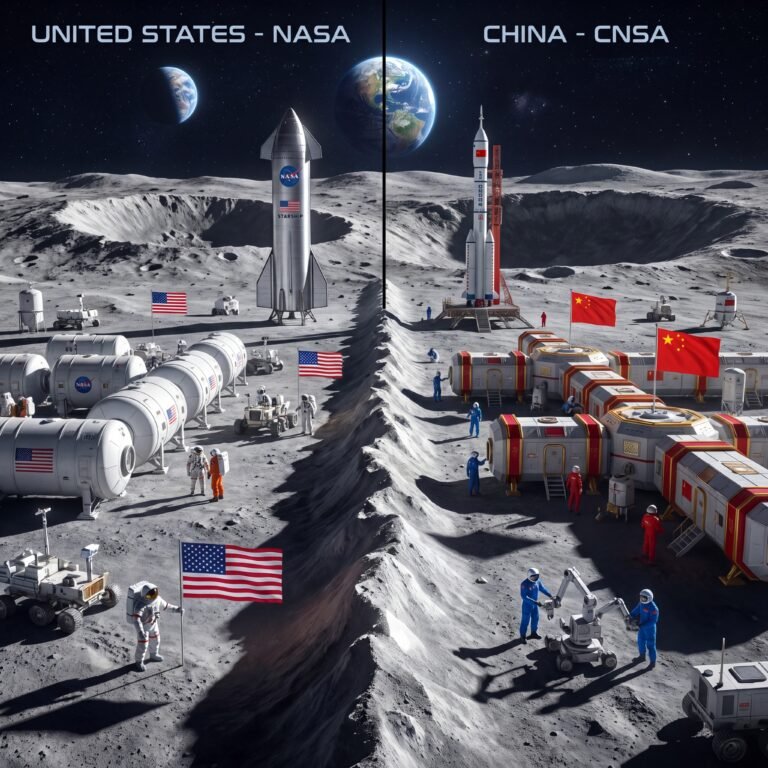
The voyage aims to pave the way for a Moon landing in 2028. That landing — Artemis III — will use SpaceX’s Starship as the lunar lander, bringing NASA astronauts to the lunar surface for the first time since 1972.
When that day comes, it will be the direct result of what Reid Wiseman, Victor Glover, Christina Koch, and Jeremy Hansen did in April 2026.
Why Artemis II Matters Beyond Space
You may be wondering: why spend billions of dollars sending four people around the Moon when we have problems to solve here on Earth?
It’s a fair question. And the answer is both practical and philosophical.
Practically: the technologies developed for deep space missions have historically produced innovations that transform life on Earth — from water purification to medical imaging to GPS navigation. The Moon is also rich in resources, including helium-3, which could one day fuel fusion energy reactors.
Philosophically: human beings are explorers. We are hard-wired to push beyond the horizon, to ask what lies beyond the next mountain, the next ocean, the next sky. Artemis II didn’t just send four people around the Moon — it reminded eight billion humans watching from Earth that we are still capable of great things. That we can still look up and reach further.
As one of the astronauts described it from the windows of Integrity, looking back at a crescent Earth above the lunar horizon: “Humanity has once again shown what we are.”
The Bottom Line
Artemis II was ten days that changed history. Four astronauts. One spacecraft named Integrity. A record-breaking journey to 252,756 miles from Earth. Seven thousand photographs. A solar eclipse no human had ever witnessed. And a Moon — ancient, cratered, and impossibly beautiful — seen by human eyes in ways no one had ever seen before.
The Moon is calling again. And this time, we are answering.
🌐 Follow neboda.ai for the latest space news, mission updates, and the stories of the people pushing the boundaries of human exploration.