
Sixty-seven years ago, the Soviet Union launched Sputnik and the world held its breath.
That small metal sphere, beeping as it circled Earth, sent a shockwave through Washington so powerful it reshaped American education, defense spending, and scientific ambition for an entire generation. It launched the original space race — a competition that ultimately put American astronauts on the Moon, planted an American flag in the lunar soil, and defined the second half of the twentieth century.
Now, in 2026, the world is holding its breath again.
Only this time, the competition is not for Earth orbit. It is not for the Moon itself — not exactly. It is for something far more specific, far more strategically valuable, and far more consequential for the long-term future of humanity.
It is for a patch of frozen ground at the bottom of the Moon.
The lunar south pole is the most coveted piece of real estate in the solar system. And right now, two superpowers are in a dead sprint to claim it.
Why the South Pole? The Answer Is Water
To understand why the entire world is suddenly obsessed with the bottom of the Moon, you need to understand one thing: water.
Water ice could be a valuable resource for future Moon exploration, as it could be used as a source of drinking water, to cool equipment, or to produce fuel and oxygen.
On the surface, that sounds modest. Drinking water. Oxygen. But follow the logic all the way, and the implications are staggering.
Water is made of hydrogen and oxygen. When liquefied, both of these elements can ignite and be used to very effectively propel spacecraft. If this alchemy works on the Moon, then that would make the lunar south pole more than just a scientific research post.
A Moon base that can make its own rocket fuel from local ice doesn’t need to be resupplied from Earth every few months at a cost of hundreds of millions of dollars per mission. It becomes self-sufficient. And more than that — it becomes a refueling station for the entire inner solar system. Spacecraft heading to Mars could stop at the Moon, fill up on locally-produced propellant, and continue their journey. The Moon’s south pole, if its water ice can be successfully harvested, becomes the gas station at the edge of the solar highway.
A lunar base able to produce its own oxygen from local water ice would be far more self-sufficient than one entirely dependent on resupply from Earth. Water also provides radiation shielding. The hydrogen nuclei in water molecules are highly effective at absorbing and scattering the high-energy protons and neutrons of galactic cosmic radiation and solar particle events.
This is why every major space agency on Earth has its sights locked on the lunar south pole. It is not just science. It is strategy. It is survival economics. And it is the foundation for everything that comes after — Mars, the asteroid belt, the outer planets.
As one expert put it bluntly: “The country that lands on the Moon first will shape the rules of engagement in space for decades to come.”
What Makes the South Pole Special — And Dangerous
The Moon’s south pole is unlike anywhere else on the lunar surface — and unlike anywhere humans have ever tried to operate.
Deep craters near the south pole never see sunlight — temperatures plunge below -200°C. These cold traps act like natural freezers, preserving ice deposits scientists believe have existed for millions of years.
These are the permanently shadowed regions — craters so deep, and the Moon’s axial tilt so slight, that sunlight has not touched their floors in billions of years. In that perpetual darkness, temperatures drop to some of the coldest points in the entire solar system — colder than the surface of Pluto. And in that extreme cold, ice that arrived on comets and asteroids billions of years ago has been perfectly preserved, waiting.
The rim of Shackleton Crater is emerging as a prime landing candidate. It offers rare near-constant sunlight while sitting dangerously close to permanently shadowed regions — making it both strategic and risky. Unlike most of the Moon, certain peaks near the south pole receive sunlight for extended periods. Experts call them “peaks of eternal light,” crucial for powering missions through solar energy in a harsh environment.
But the terrain is treacherous. This isn’t Apollo’s flat terrain. The south pole is rugged, uneven, and filled with steep slopes and deep shadows. NASA engineers say landing here requires precision never attempted in human lunar missions.
Whoever gets there first faces not just political competition but one of the most technically demanding engineering challenges in human history.
China’s Plan: The Chang’e-7 Mission Launching This Year
China has not been waiting. While NASA worked through years of development, delays, and budget debates, China’s lunar program has been executing with remarkable consistency.
China’s multi-element Chang’e-7 lunar spacecraft has arrived at Wenchang spaceport for launch preparations ahead of a planned liftoff in the second half of 2026. Chang’e-7 will be prepared for launch on a Long March 5 rocket from Wenchang, with earlier reports suggesting launch in August.
The mission consists of an orbiter, lander, rover and a unique hopping probe to seek out evidence of water-ice in permanently shadowed craters at the lunar south pole. It is also a key step in China’s roadmap toward a sustained robotic and eventual crewed presence on the Moon.
The hopping probe is particularly ingenious. Rather than driving a rover to the edge of a permanently shadowed crater — which would be extremely dangerous and technically challenging — China’s hopper can literally jump into the shadow, sample what’s there, and jump back out. It is a creative engineering solution to one of the most difficult problems in planetary exploration.
Chang’e-7 is scheduled to land near the illuminated rim of Shackleton Crater in the lunar south pole region in November 2026. One expert who has studied the mission closely put China’s advantage into stark perspective: “The Chinese will be ahead of everyone else by at least one year, but probably several years. Chang’e-7 is a key mission for the study of lunar volatiles.”
Chang’e-8, to follow in 2028, will go further. The Chang’e-8 mission will focus on validating technologies for in-situ resource utilization on the Moon — essentially testing the ability to actually use lunar resources rather than just observe them. Reports indicate the mission will test whether Moon soil can be used to 3D print construction bricks, potentially building the walls of China’s first lunar outpost from local materials.
The International Lunar Research Station: China’s Moon Base Blueprint
Chang’e-7 and Chang’e-8 are not standalone missions. They are the opening moves of something far more ambitious.
The construction of the International Lunar Research Station (ILRS), jointly initiated by China and Russia, will be divided into two phases. In the first phase, a basic model of the station will be established at the lunar south pole region, capable of conducting scientific operations within a radius of 100 kilometers.
The first phase of the ILRS project calls for a “basic station” to be constructed by 2035 in the lunar south pole region, with an expanded facility scheduled to be completed by 2045.
By 2045, China plans to have a functioning, expanded research base on the Moon’s south pole — a permanent human and robotic outpost with the ability to use lunar resources for fuel, construction, and life support. The timeline is aggressive, but China’s track record makes it credible.
China has landed a rover on the dark side of the Moon, returned samples from the Moon, launched a rover to the Martian surface, and is building its own space station. As one analyst puts it: “China considers space a strategic domain.” And their agency hasn’t had any major setbacks or failures — they’ve tried some really ambitious things, and they’ve all succeeded on the first try.
America’s Response: $20 Billion and a Renewed Sense of Urgency
For years, the United States watched China’s progress with growing unease. Now, the response has arrived — and it is substantial.
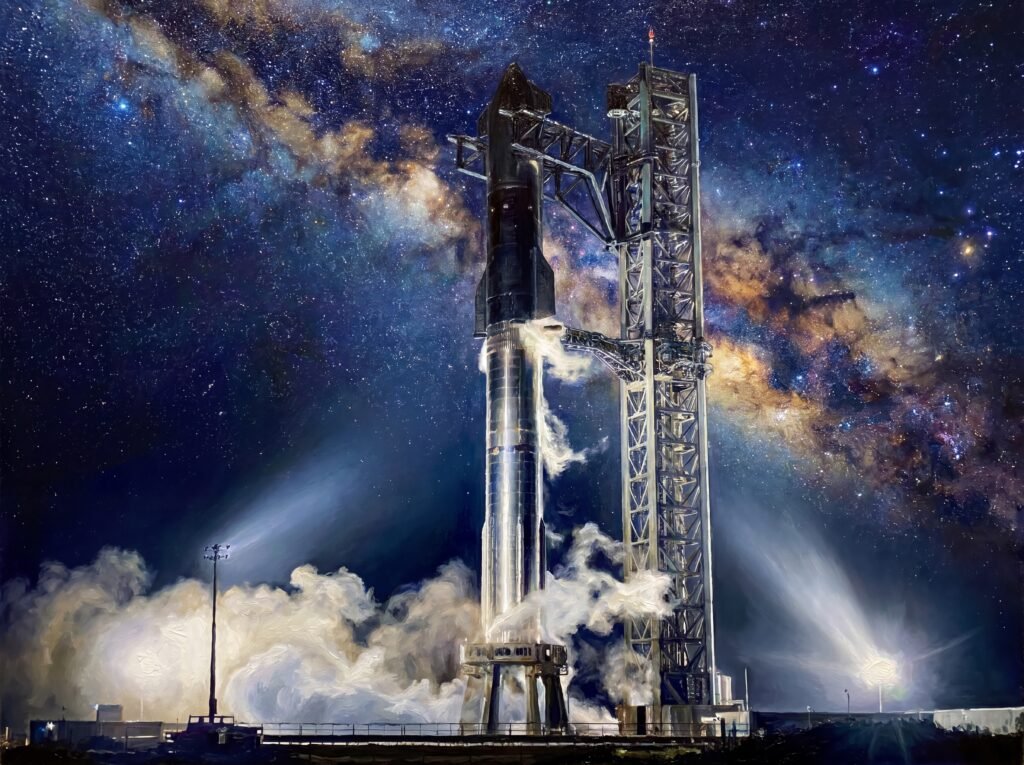
NASA announced Project Ignition on March 24, 2026, allocating $20 billion over seven years to construct a base at the Moon’s south pole that will eventually be continuously inhabited. This is not a concept study. It is not a PowerPoint presentation about distant possibilities. It is a funded program with named contractors, a phased timeline, and hardware already in development.
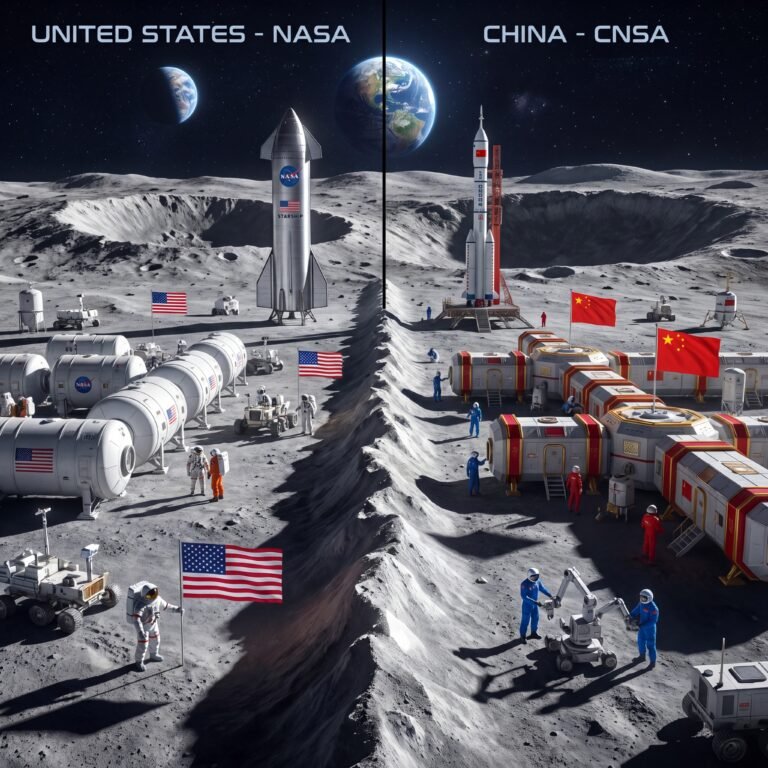
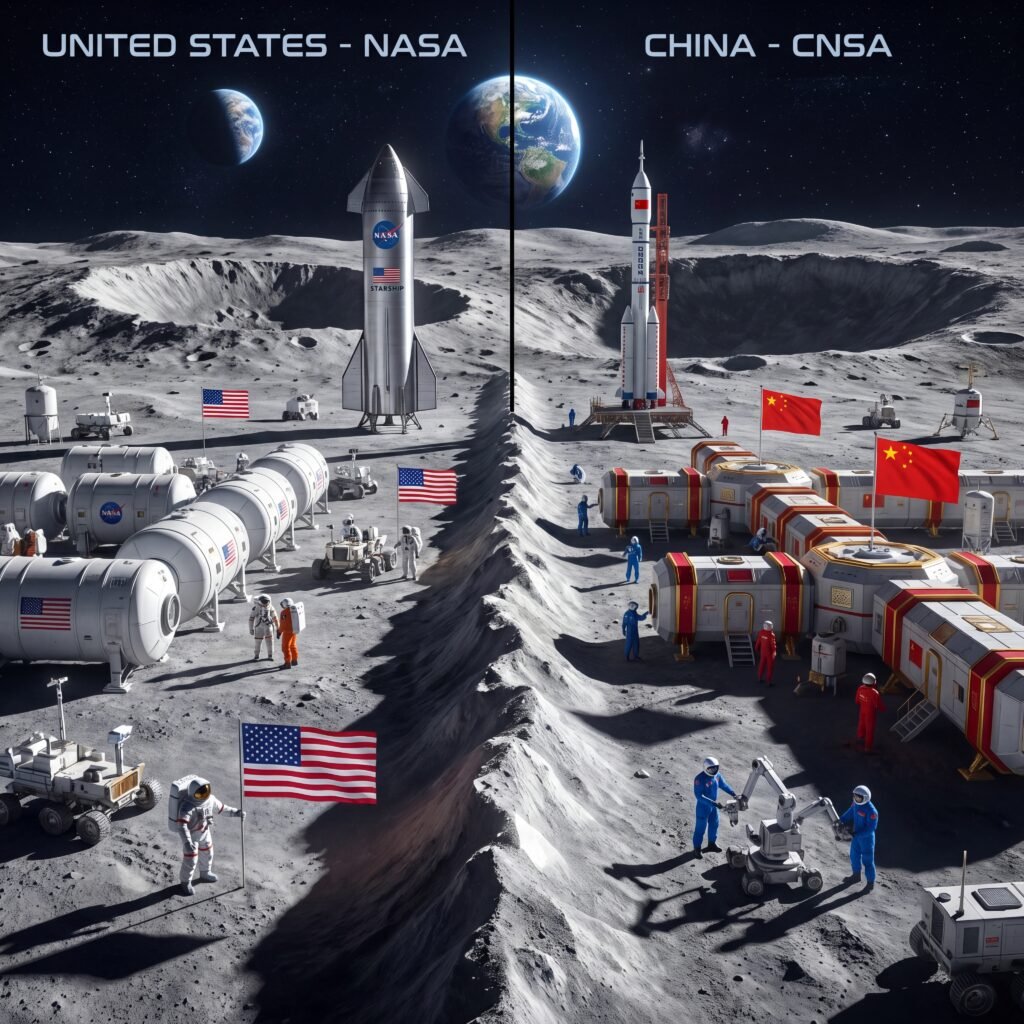
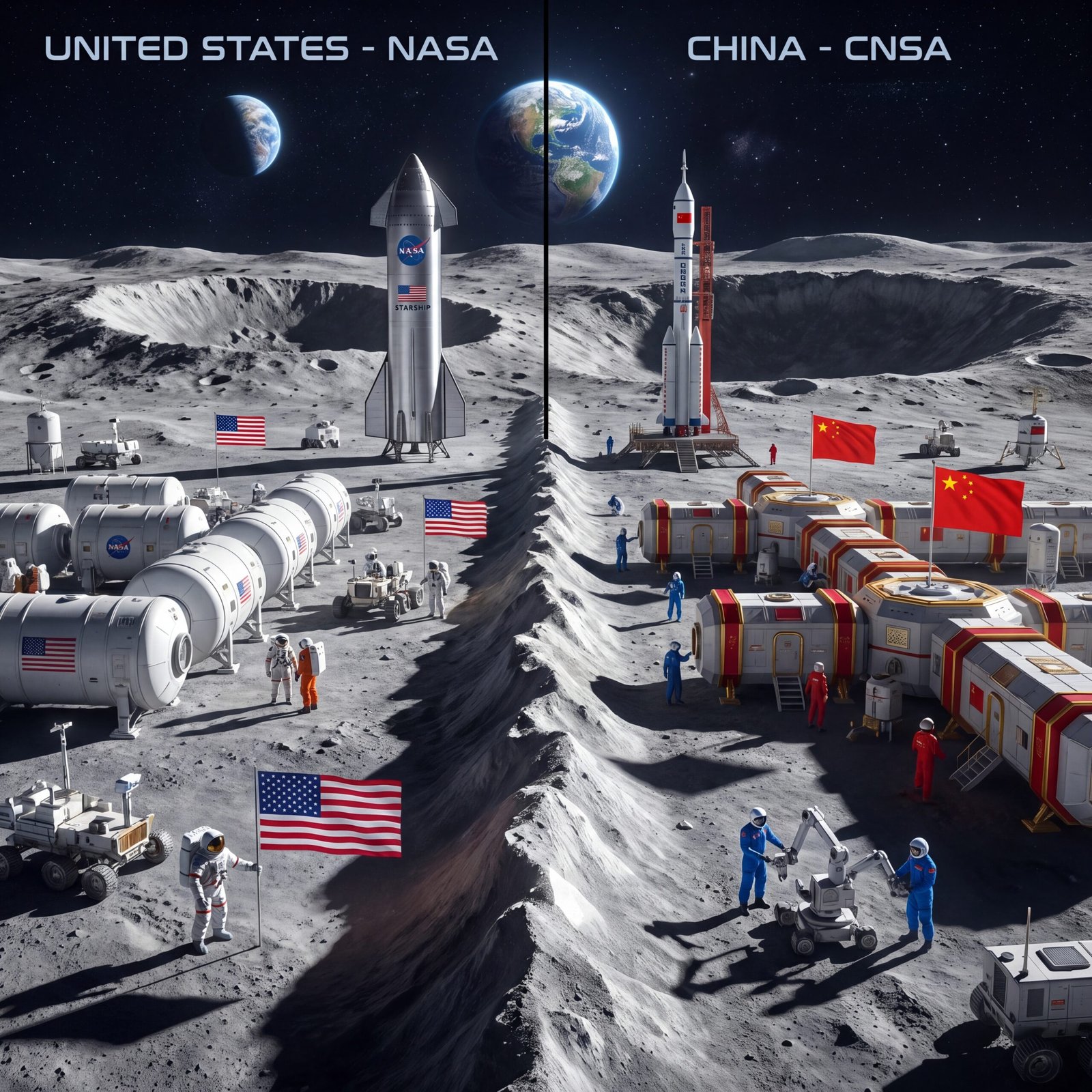
The location chosen — near permanently shadowed craters at the south pole — mirrors China’s target almost exactly. Both nations are heading for the same patch of frozen ground.
NASA Administrator Jared Isaacman has been direct about the competitive stakes. When Isaacman took the stage at a conference earlier this year, much of his remarks revolved around “our great rival,” China. “We are in a new space race to the lunar surface, and if we fall behind, we may never catch up,” he said.
An executive order from the Trump administration set the objective: Artemis astronauts will land near the Moon’s south pole by 2028 and start building a lunar outpost by 2030, with the goal of “ensuring American space superiority.”
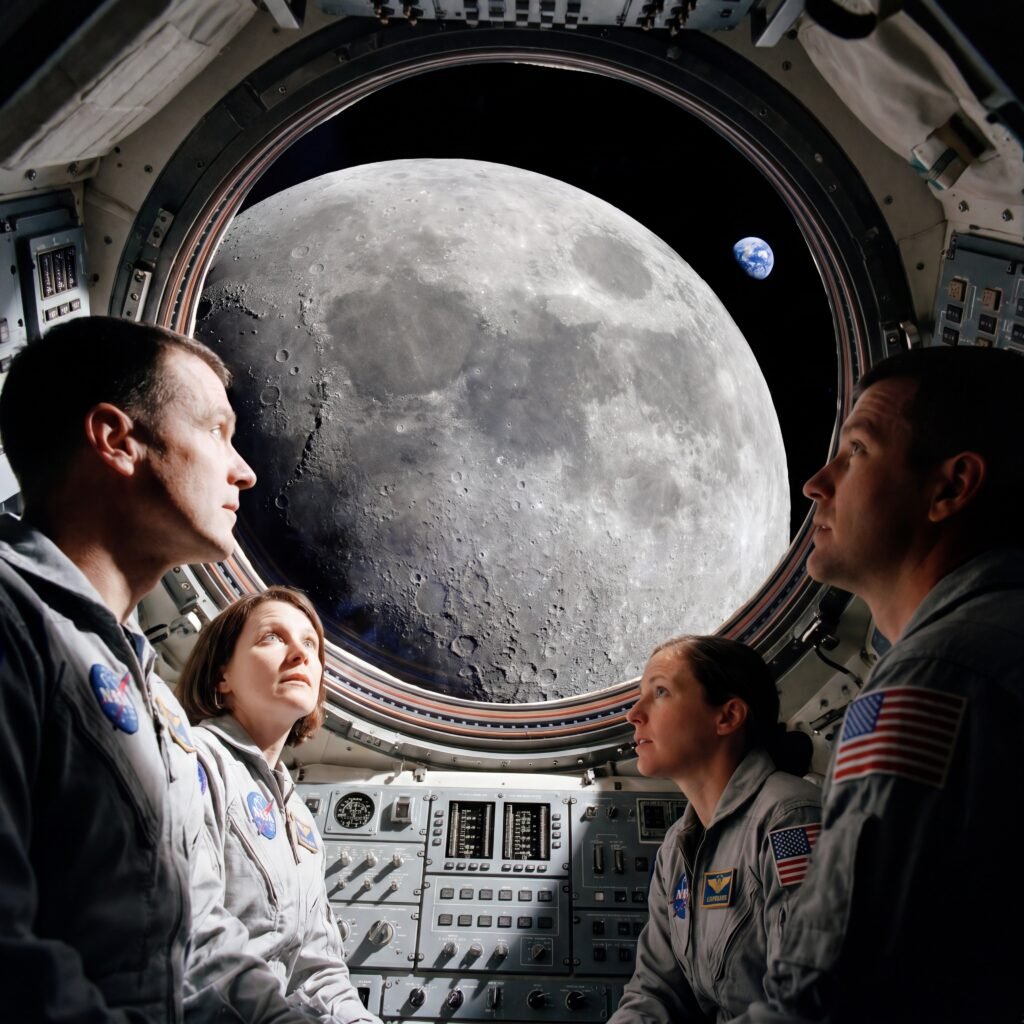
The Artemis II mission that launched on April 1, 2026 — which successfully flew four astronauts around the Moon and back — was a critical validation of the hardware and systems needed for what comes next. With a race against China likely to focus minds and open purse strings in Congress, NASA is now announcing changes to speed things up. “The clock is running in this great-power competition, and success or failure will be measured in months, not years.”
The Rules of the Road — and Who Makes Them
Beneath the engineering competition lies a deeper and more consequential contest: the question of who gets to write the rules for humanity’s presence on the Moon.
China has not signed the Artemis Accords, for several clear reasons, including legislation in the US that prevents it from collaborating with China on space technologies. Instead, the International Lunar Research Station is the major competitor with Artemis.
The Artemis Accords — signed by dozens of nations — establish principles for responsible behavior in space: transparency, peaceful purposes, the sharing of scientific data, and the protection of heritage sites. China, operating outside this framework, is building its own competing coalition of partner nations for the ILRS.
The result is a Moon increasingly divided not by geography but by geopolitical alignment. Nations are being asked to choose — implicitly or explicitly — which framework they subscribe to, and which program they join.
If America isn’t the first to return to the Moon, experts warn, “we risk ceding the best ice reserves to China” — ice that can be split into oxygen and hydrogen for fuel, or used for drinkable water.
Former NASA officials have gone further. One former administrator warned that if China establishes a permanent presence at the best water-ice deposits first, it could effectively create a de facto exclusion zone — not necessarily through legal claim (the 1967 Outer Space Treaty prohibits national ownership of celestial bodies), but through physical presence. You cannot mine ice that another country’s equipment is already sitting on.
One senior space policy expert warned starkly in congressional testimony: “We cannot control what China is doing.”
What This Means for Every Human Being on Earth
This is not just a story about rockets and flags. The outcome of the lunar south pole competition will shape human civilization for centuries.
If water ice can be harvested in commercial quantities, the Moon becomes a refueling hub that makes interplanetary travel economically viable. The cost of reaching Mars — currently measured in years of flight time and billions of dollars — drops dramatically. Scientific missions to the outer planets become more feasible. A permanent human presence beyond Earth becomes sustainable rather than symbolic.
Both the United States and China plan to build their own lunar bases on the lunar south pole. If this alchemy works on the Moon, then that would make the lunar south pole more than just a scientific research post — it would make it the most strategically important location off Earth.
The technologies developed for lunar survival — closed-loop life support, in-situ resource utilization, radiation protection, extreme-environment construction — will inevitably flow back to Earth, finding applications in medicine, materials science, energy production, and environmental management.
And the spirit of competition itself — like the original space race — tends to accelerate human innovation in ways that peaceful, well-funded research programs rarely match.
The Timeline: What Happens Next
Here is where things stand heading into the second half of 2026:
China’s side:
- Chang’e-7 launches August 2026, targets Shackleton Crater rim by November 2026
- Chang’e-8 follows in 2028, tests lunar resource extraction
- First crewed Chinese lunar landing targeted for approximately 2030
- ILRS basic station targeted for 2035
America’s side:
- Artemis II completed April 2026 — humans flew around Moon for first time since 1972
- Artemis III targets first crewed Moon landing since 1972, planned for 2028
- Project Ignition ($20 billion) targets a permanently inhabited south pole base beginning construction by 2030
- NASA’s VIPER rover (delivered by Blue Origin’s Blue Moon lander) to arrive at south pole no earlier than 2027 to map water ice
The timelines overlap. The targets are nearly identical. And the stakes could not be higher.
The Bottom Line
The first space race gave us the Internet, GPS, weather satellites, and a generation of scientists and engineers inspired by the sight of humans walking on the Moon. It reshaped the world.
The second space race — the one happening right now, in 2026, with Chinese hardware arriving at the Wenchang spaceport and American astronauts fresh from flying around the Moon — has the potential to reshape it again. Not just in terms of technology, but in terms of who leads the next century of human civilization, whose values govern the next frontier, and whether the Moon’s extraordinary resources belong to all of humanity or to whoever gets there first and sets up camp.
Chang’e-7 lifts off in just months. NASA’s lunar lander is under development. The race is not a metaphor anymore.
It is a launch schedule.
🌐 Follow neboda.ai — your front-row seat to the new space race, the missions that will define the 21st century, and humanity’s next giant leap.